
Meta Title
A meta title, often called a "title tag," is essentially the title of a webpage.
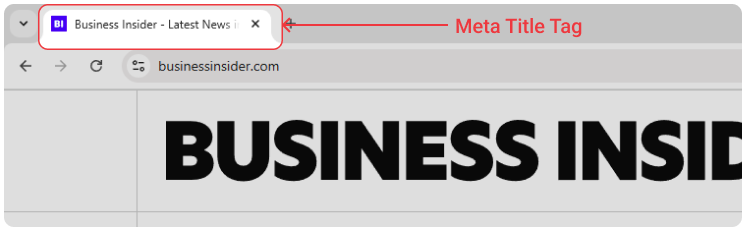
- The meta title tag content is shown in browser tabs, search results, and social share snippets.
- It strongly influences click through rates by acting as the first impression and promise of what the page delivers.
- Search engines use the meta title to understand the page's topic and it contributes as a ranking factor in SEO.
- Good meta titles are clear, accurate, concise, naturally include key terms, and often reinforces your brand.
- Poor meta titles are vague, stuffed with keywords, duplicated across pages, or overly generic, which confuses both users and search engines.
What is a Meta Title?
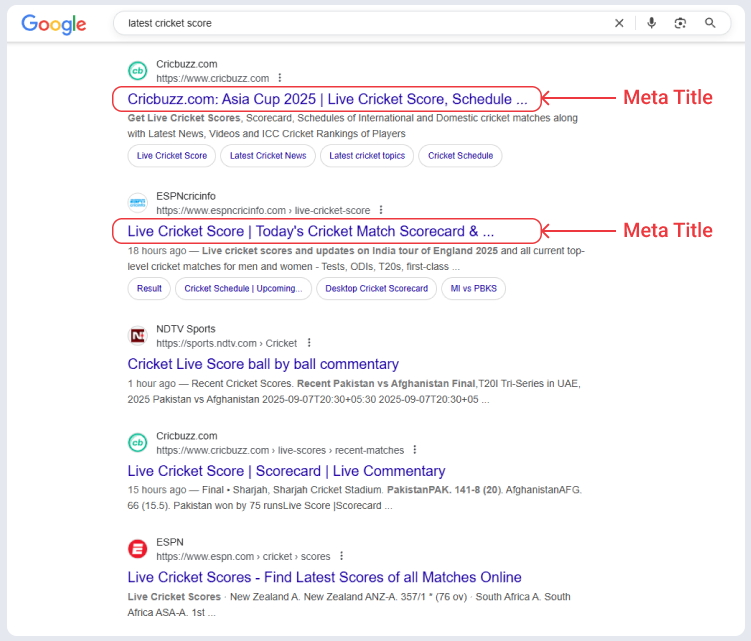
The meta title is an HTML element that denotes the title of a webpage. It appears prominently on search engine results pages (SERPs) and on the browser tab. A strategic meta title can significantly impact click-through rates from SERPs, making it essential for user engagement and SEO.
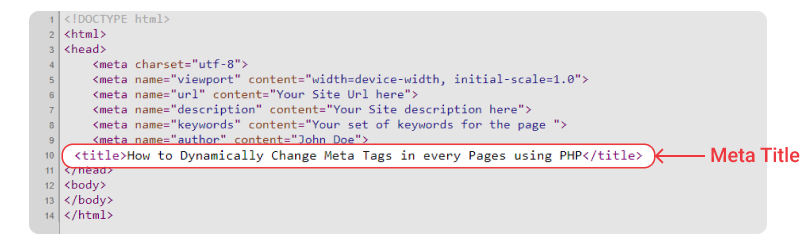
HTML encapsulates the meta title within a webpage's <head> section through the <title> tag. Here's a simple code snippet to include meta title tag in the <head> section of your HTML code :
<title>Content of the Title Tag</title>
Examples of How Meta Titles Look
Top browser tab of the page:
On the page’s HTML markup:
On the SERPs page:
Why Does a Meta Title Matter?
The meta title content is often the very first interaction a user has with your brand.
It’s the clickable headline that appears in search results, on social media shares, and in browser tabs. Get it right, and you invite people in. Get it wrong, and they keep scrolling.
Here is why meta title tag content is very important for websites:
- First Impressions Count. A clear, compelling title can be the difference between someone clicking your link or skipping past it.
- It tells search engines what your page is all about. Search engines rely on the meta title to understand what your page is about and decide when it should appear in results.
- Sets expectations for visitors. A precise title tells users what they will get on the page, reducing bounce rates and improving engagement.
- Supports your branding. Consistent, well crafted titles help reinforce your brand voice and make you more recognizable in crowded search results.
- Drives qualified traffic. When your title aligns with search intent and includes relevant keywords, it attracts the right visitors who are more likely to convert.
A strong meta title isn’t just “nice to have.” It’s one of the simplest, highest-impact optimizations you can make to boost visibility, earn more clicks, and set the tone for the rest of your on page SEO.
Do's and Don'ts of Meta Titles
Do's
- Keep it Crisp: Use 50–60 characters to avoid truncation in search results.
- Integrate Keywords Judiciously: Include exact match keywords naturally.
- Ensure Accuracy: Make sure the title truly reflects the page content.
- Write for humans first: Prioritize clarity and appeal for real people, then fine-tune for search engines.
- Create curiosity (without clickbait): Use benefit-driven language or a hook that encourages clicks while staying honest.
- Use action-oriented language: Words like learn, discover, get, compare, download can guide users toward taking action.
- Maintain a consistent style: Follow a consistent tone, capitalization style, and branding structure across your site.
- Test and refine: Use A/B testing (where possible) and performance data (CTR, rankings) to tweak underperforming titles
Don’ts
- Avoid keyword overkill: Don’t stuff your meta title with repetitive or awkward keyword phrases.
- Don’t mislead users: Avoid clickbait promises your content doesn’t fulfill, this leads to higher bounces.
- Don’t duplicate titles: Don’t use identical or near-identical titles for multiple pages; it confuses both users and search engines.
- Don’t waste space: Skip vague phrases like “Home” or “Welcome” which doesn't add value.
- Don’t target everyone: Avoid targeting multiple topics into a single meta title..
- Don’t ignore your brand: If your brand has recognition and trust, don’t forget to include it.
- Don't over-optimise: Excessive capitalization, emojis, or special characters can look spammy and hurt credibility.
Good vs Bad Meta Title Examples
Seeing real examples is one of the easiest ways to understand what separates a strong, high performing meta title from a weak one. Good titles are clear, specific, and aligned with search intent. Bad titles are usually vague, stuffed with keywords and so generic that they give users no reason to click.
Examples of Good Title tag content
| Example | Why this is good |
|---|---|
| Quick & Easy Vegan Chocolate Cake Recipe - Delightful Desserts | Clear, descriptive, and benefit-driven. It tells users exactly what they’ll get and adds a brand touch at the end |
| Top 10 Running Shoes of 2026: Expert Reviews | Uses a list format, includes a year for freshness, and highlights that the content is based on expert insights. |
| Ultimate Guide to Growing Roses in Temperate Climates | Targets a specific topic and audience (“temperate climates”) thereby promising in-depth, helpful content. |
| How to Build a Successful Freelance Business in 2026 | The word "How-to" signals that this is a guide and the content is instructional and educational in nature. |
| Comparison of Best Budget Smartphones Under $300 – 2026 | Title tag content is focussed on a price range and year, appealing directly to cost-conscious users. |
| Beginner’s Guide to Yoga Poses: Step by Step Instructions for Flexibility | Clear target audience (beginners) and clear benefits (flexibility). |
Examples of Bad Title tag content
| Example | Why this is Bad |
|---|---|
| Vegan Chocolate, Chocolate Vegan, Vegan Cakes, Cakes Vegan | Keyword stuffing at it's best. It’s repetitive, hard to read, and doesn’t feel trustworthy or user friendly. Moreover, thistype of keyword stuffing is a violation of Google search essential quality guidelines. |
| Homepage | It doesn’t tell users or search engines anything about what the page is all about. |
| Page 1 - WordPress Site | Generic, meaningless labels that provides no context or value in search results. |
| CLICK HERE!!! Best Deals For Christmas - Click Here! | Spammy, desperate, and meaningless repetition or call to action without any value. |
| Best Bags, Shoes, Apparel and Skirts for Women | Although there is content, but the title tag is trying to do many jobs at once. This is oversaturated with broad terms and difficult for search engines to categorize by intent. |
When you’re crafting meta titles, aim to be clear, relevant, and compelling—while still honest about what’s on the page. The goal is not just to rank, but to earn the right click from the right user by setting accurate expectations from the very first glance.
Are Title Tags an SEO Ranking Factor for Google? - Yes, they are. Google's John Mueller has emphasized the importance of title tags, stating, "Titles are important. They are important for SEO. They are used as a ranking factor." However, it’s one of many factors that influences the ranking of web pages in Google search results.
The meta title is more than just a label. It's a powerful tool that, when used effectively, can improve website visibility, engage users, and enhance branding. Proper optimization of the meta title is crucial for SEO success and providing a better user experience.
FAQs on Meta Title
No, while both are important for SEO, the meta title appears in SERPs and browser tabs, while the H1 header appears as the main heading on the page.
Yes, a relevant and well-optimized meta title can improve rankings and click-through rates from SERPs.
A meta title is an essential HTML component for optimizing your website. It may differ from the visible title on the page.
The meta title is located within the <head> section of a webpage's HTML code and displays on the browser tab.
Make it clear and descriptive, align it with the page’s content, and include the main keyword within 50-60 characters.
While not technically required, it’s highly recommended for SEO and better user experience.